
Finding Whitehall Township Residents
Begin with the record that can answer the question at hand. A known Whitehall Township address points to the county property card and a parcel identifier. A past household calls for a dated directory, map, tax record, or obituary. A full name needs a second fact, such as a village name, date range, legal description, or court number, before it is treated as the right person. Whitehall Township is a home-rule township, so county and state custodians hold many of the records a resident search needs.
Property ownership is not the same as residence. The county card can identify a titled owner and show a property address, but it cannot establish every person who lives there. Voter status, court dockets, vital records, and historical collections each have their own access rules and limits. Choose a source for what it actually records, then verify a meaningful match with an independent record.
- Start with a Whitehall Township address in ORA, or keep a full name, variant spelling, time frame, and village label together before searching.
- Record the parcel ID, old parcel ID, owner mailing address, property address, and any subdivision or legal-description clues shown on the card.
- Use Sales History to find a document ID or book and page, then test the transfer in the Recorder of Deeds index.
- For a former household, compare dated directories, newspaper notices, census material, maps, and estate records instead of relying on one name match.
- When no online result exists, use the custodian that holds the defined record, such as the Recorder counter, the township RTKL officer, the elections office, a library, or LCHS.
Note: A missing online result may reflect a separate custodian, a protected record, or an unindexed historical source rather than no record at all.
Whitehall Township Records Offices
Whitehall Township does not operate its own recorder, assessor, or trial-court clerk. Lehigh County keeps the parcel, deed, civil, probate, marriage, and election routes, while the township holds municipal permits, inspections, code material, minutes, and its own RTKL process. Pennsylvania agencies are the relevant custodians for voter-status verification and modern birth and death certificates. This division matters because a request sent to the wrong office can delay a focused search.
The county courthouse functions are in Allentown, not at the township building. For an address chain, use the county property and Recorder channels. For a municipal permit or occupancy file, identify the street address, record class, and time period for the Township Right-to-Know Officer. The full address-by-address sequence is available through the Whitehall Township street directory.
Recorder of Deeds Division
455 W. Hamilton Street, Room 122
Allentown, PA 18101-1614
610-782-3162
County recorded-document route
Lehigh County Assessment
County property and parcel route
Public search by address, PIN, or document ID
Counter contact not captured
County public property-search route
Lehigh Voter Registration
17 South Seventh Street
Allentown, PA 18101-2401
610-782-3194
State voter-status route
The Recorder of Deeds records-search page shows the county route for public recorded documents.
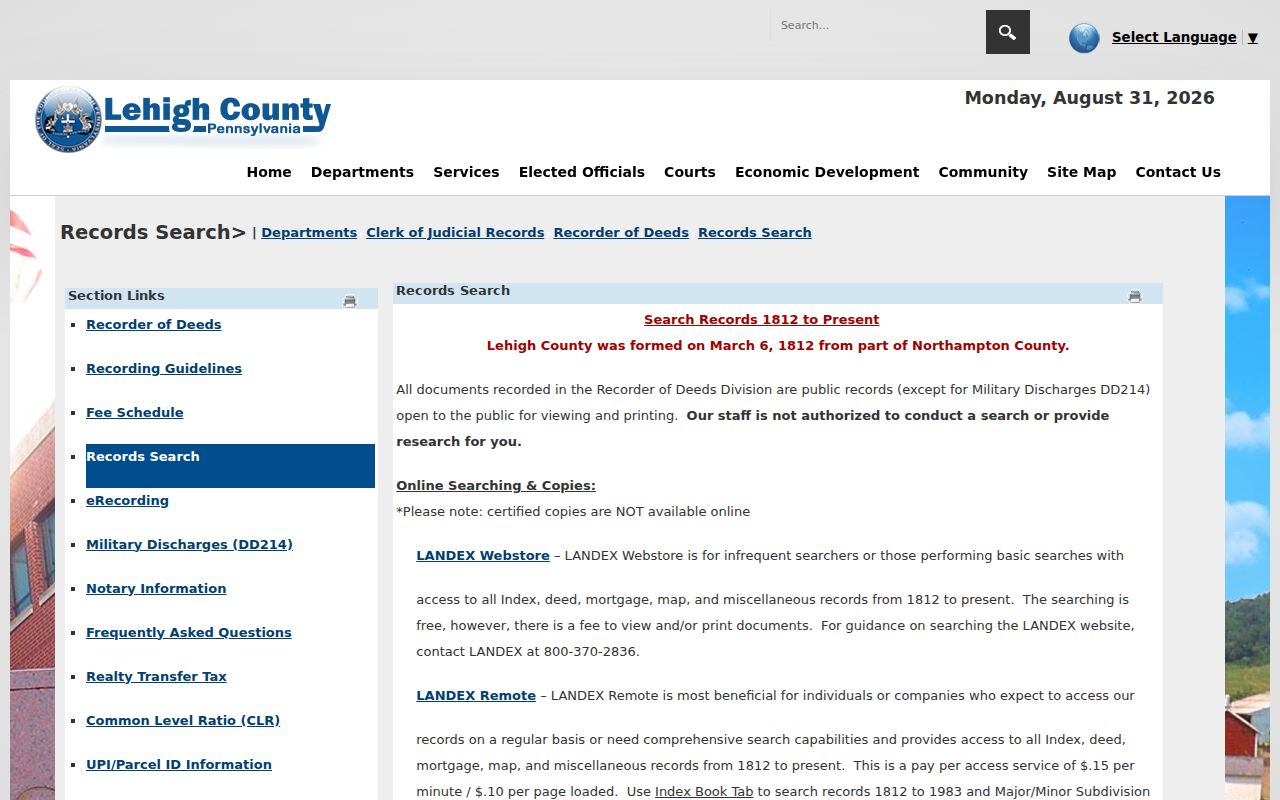
Its index is useful when a property transfer has already supplied a party, instrument number, or book and page.
The Lehigh County Civil Division is a separate county route for civil, family, judgment, lien, and related scanned records.
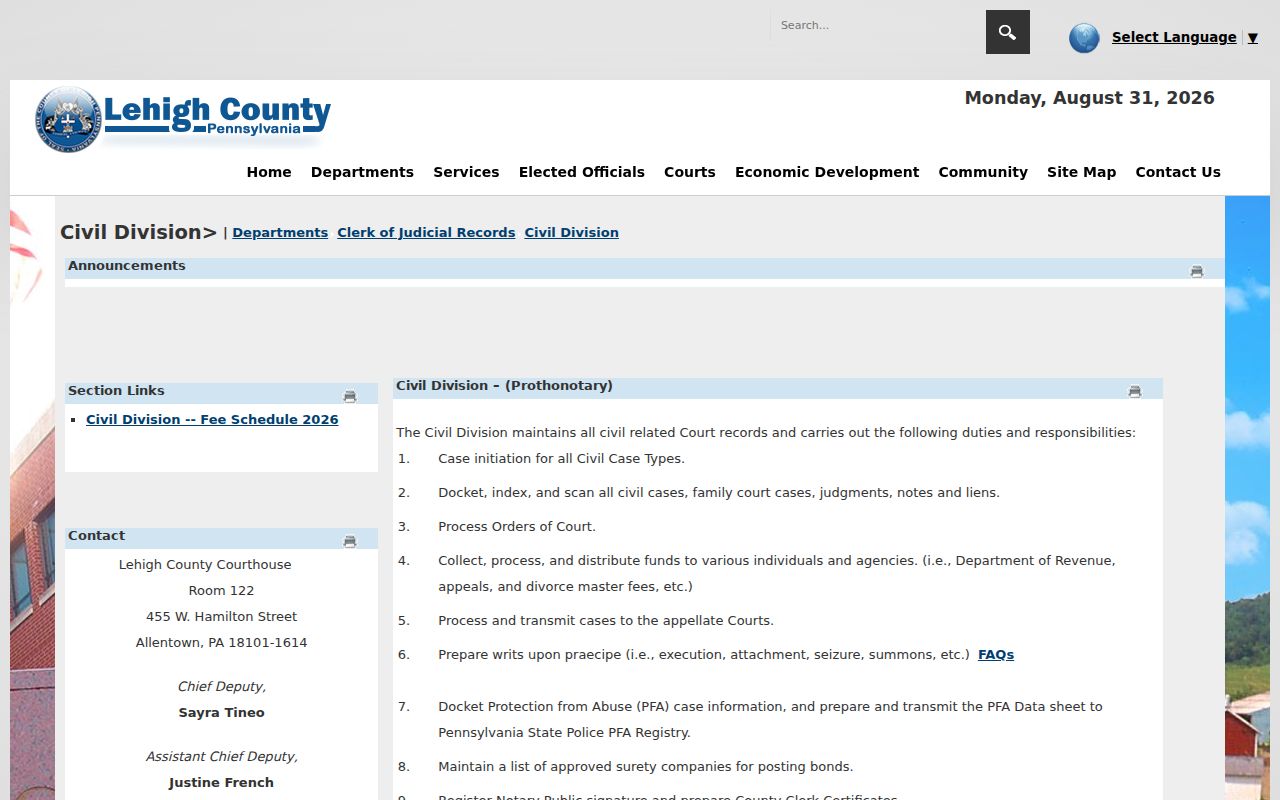
That separation helps prevent treating a recorder search as a complete court-record search.
Whitehall Township ORA Property Search
Lehigh County Online Records Access, known as ORA, is the practical first stop when an address or parcel clue is already known. The public form does not offer an owner-name or ZIP search type. It asks for at least four characters, rejects special characters, displays a captcha, and accepts an address, Parcel Identification number, or Document ID or Instrument Number. A returned property card can display owner information, but the search controls themselves set the order of work.
Keep the exact result details. A property card separates owner name, owner address, property address, current and old parcel IDs, subdivision clues, tax authority, zoning, and Sales History. The sales row may supply a modern document ID or a legacy book and page. Those are the details that select the appropriate Landex search route rather than leaving a researcher with only a common name.
| ORA field | Input type | Requirement | Whitehall Township search note |
|---|---|---|---|
| Enter Search Text | Text | Required | At least four characters; special characters are not permitted. |
| Select Search Type | Dropdown | Required | Address, Parcel Identification (PIN), or Document ID/Instrument Number. |
| Captcha | Challenge | Required | Shown before the public search can run. |
| Parcel Viewer | Link | Optional | Opens the map-oriented county parcel route. |
The ORA Property Search displays the county’s address, PIN, and document-ID entry route.
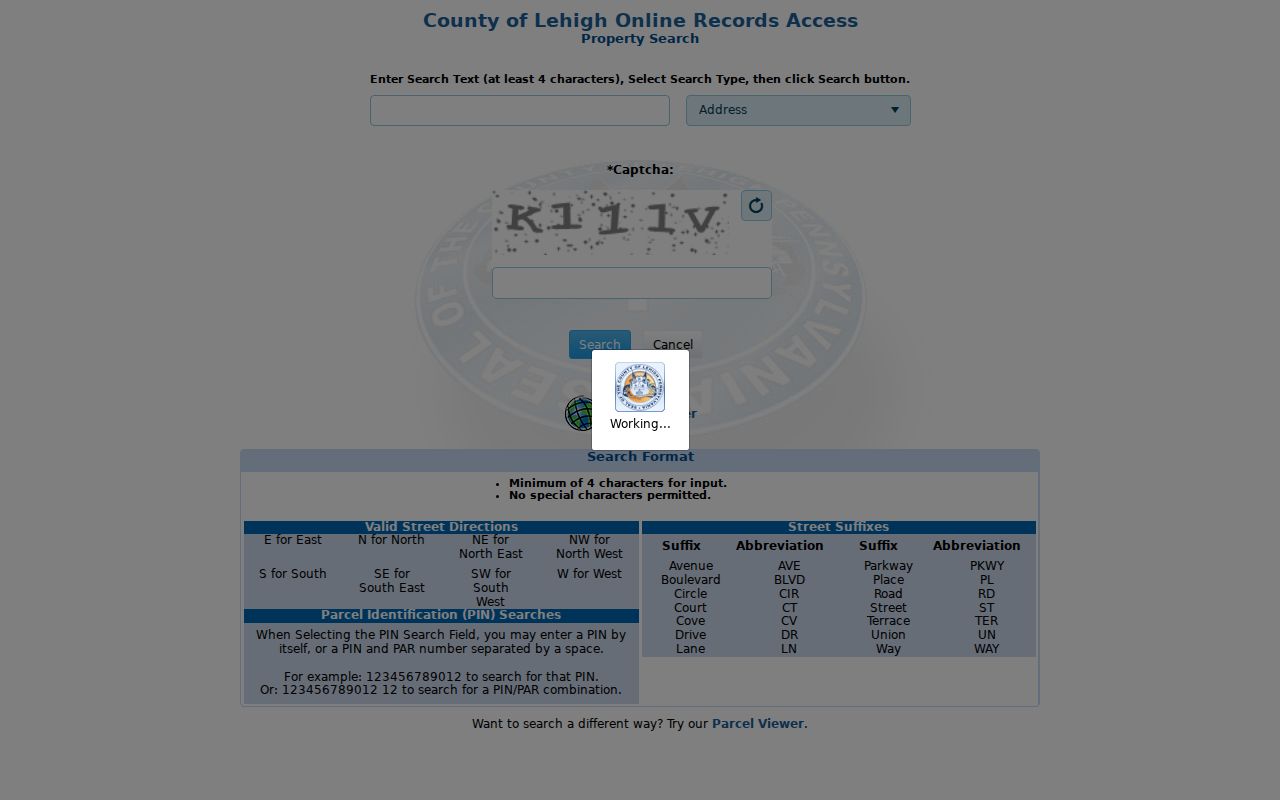
Use the published directional and street-suffix formats when a Whitehall Township address does not first resolve.
Whitehall Township Parcel Card Limits
A parcel is a defined piece of land in the assessment system. Its situs address is the physical property address, while the owner address is where assessment or tax mail is sent. Those fields may match, but they should not be assumed to match. A mailing address can be an office, another property, or a dated administrative entry. The card also records assessment and building information for tax purposes, not a complete account of a household.
The county’s Parcel Viewer adds map context. It has an address or place geocoder, PIN search, parcel boundaries, roads, assessment information, municipal boundaries, flood zones, and map tools. It can support a parcel-by-parcel review, but it does not certify occupants. When the question becomes who lived along a named road, the address-specific record chain belongs on the street directory page rather than a broad resident search.
- Parcel
- A county assessment identifier for a defined property, often used with a PIN and legal description.
- Situs address
- The physical property address shown separately from the owner’s mailing address.
- Index
- A search tool that points to a record or document; it is not necessarily the document image itself.
- Criss-cross directory
- An address-oriented historical directory that can help connect a property to a dated listing when an edition includes the place.
The Lehigh County GIS page leads to the official Parcel Viewer and its public map tools.
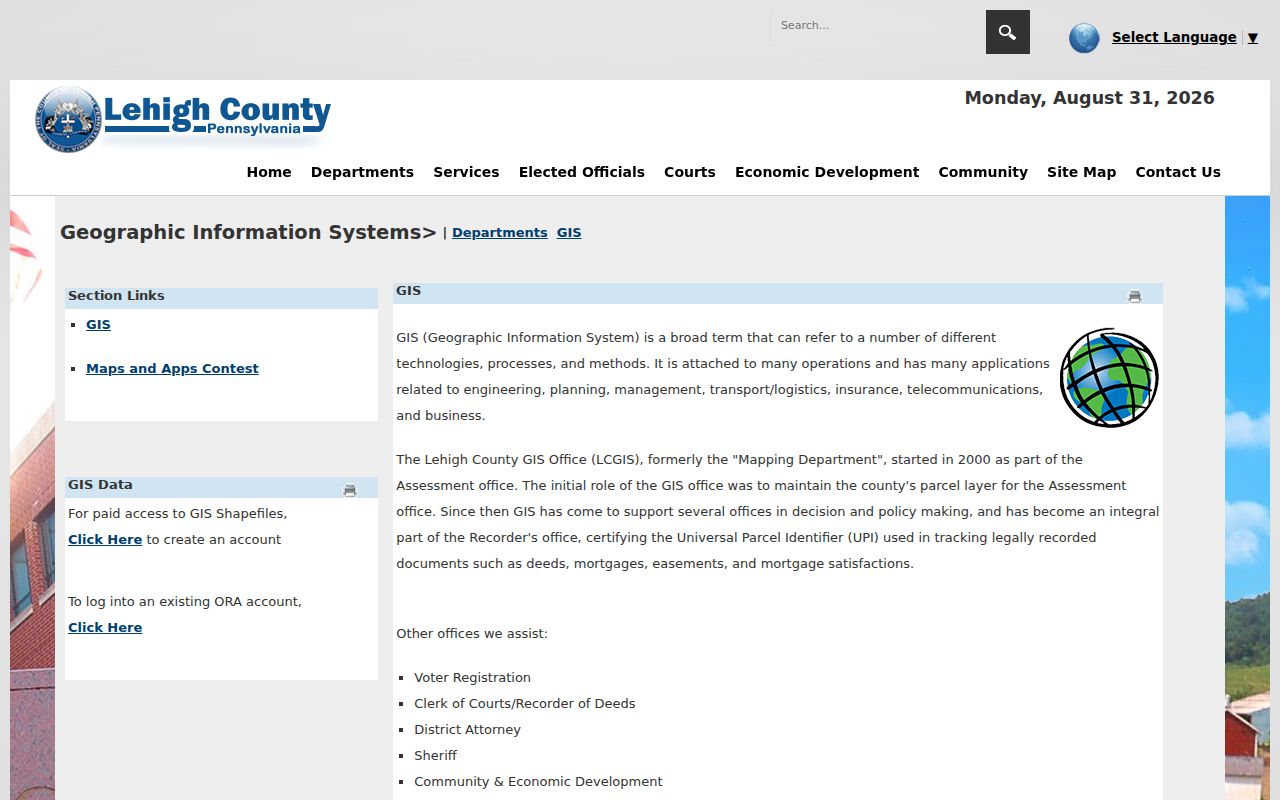
The map is a bridge from a property card to parcel geography, not proof that surrounding parcels share the same household.
Note: Assessment data can support property research, but it cannot confirm every Whitehall Township resident at a location.
Current Whitehall Township Resident Sources
There is no single current Whitehall Township residents directory maintained by one custodian. The most useful current sources record different relationships: titled property, a recorded document party, an individual voter-status check, a court case party, or a public municipal role. Formal voter lists are controlled documents, and the state status tool is not a street-browsing directory. Each source should be read as a dated administrative record with its own scope.
| Current source | What it can identify | Custodian | Access boundary |
|---|---|---|---|
| ORA parcel card | Titled owner, mailing address, situs, parcel and tax context | Lehigh County Assessment | Public address, PIN, or document-ID search; not all occupants. |
| Recorder index | Parties to deeds, mortgages, and other recorded instruments | Recorder of Deeds Division | Free index search; images and copies carry payment terms. |
| Voter status tool | Individual registration-status verification | Pennsylvania Department of State | Not a public block or street directory. |
| Township staff and board material | Named public officials and municipal contacts | Whitehall Township | Public-function information, not a household list. |
| Library yearbooks and local collections | Historical school and community context | Whitehall Township Public Library | Collection terms vary; some resources are in-library only. |
The Pennsylvania voter-registration status service is designed for an individual status check.
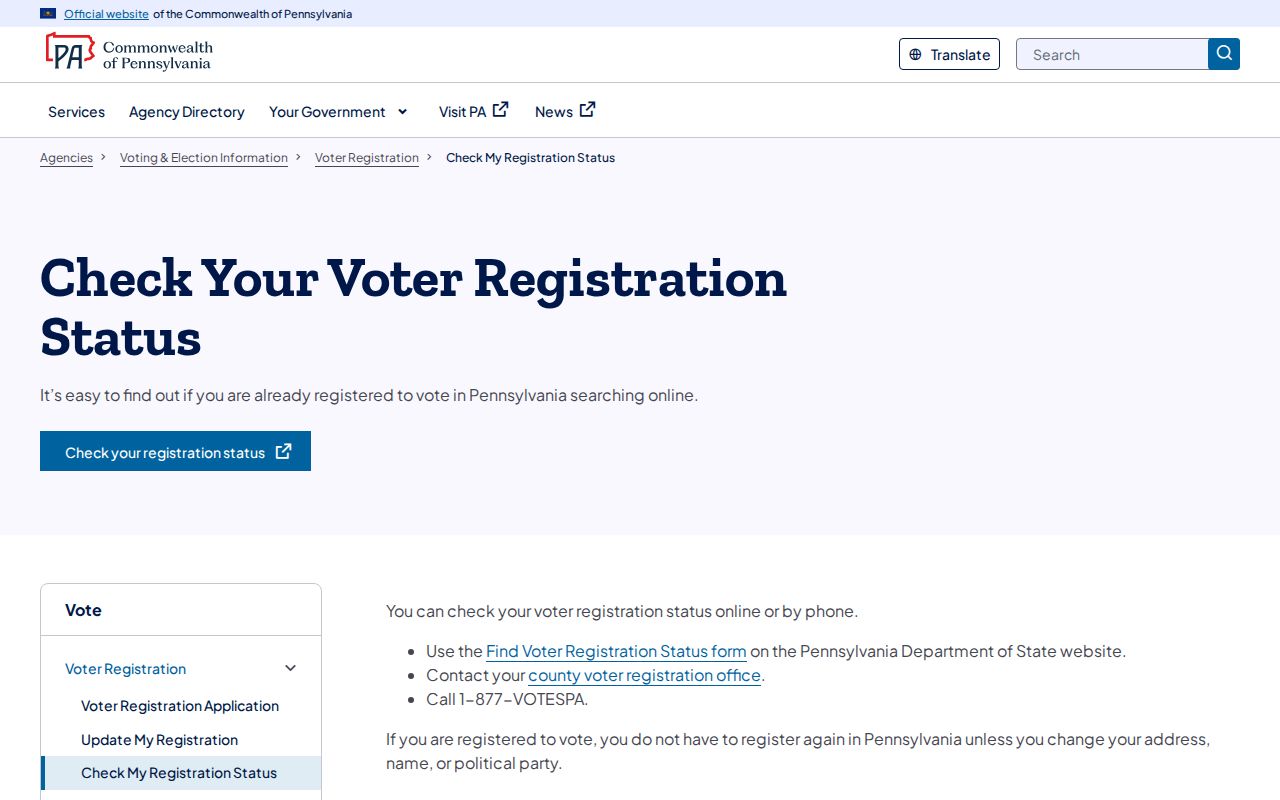
It should be used for the input person’s status rather than as a means to enumerate Whitehall Township residents.
Whitehall Township Voter Status Route
Pennsylvania’s public check lets a registered voter confirm status online or by phone. Lehigh County Voter Registration is the local assistance office, while the Township’s polling-place information provides civic geography only. The online form is not a complete public list and its live field labels were not captured in the research. It is therefore more accurate to describe it as a person-by-person status tool than to promise fields or results that the public landing page does not publish.
State law does permit defined registration documents and public-information lists under conditions. The Department’s request form distinguishes Public Information, Street, Walking, and Full Voter Export lists. The form requires requester identification and a permitted-use certification. It also describes limits on internet publication and protection of certain identifiers and protected addresses. These are regulated election records, not an unrestricted residents directory.
For a formal request, use the Department’s current form and the Lehigh elections office rather than scraping a status page. A list can be dated, include inactive records, and reflect changes reported through its maintenance cycle. It cannot be used to defeat a substitute address or other privacy protection.
Note: A voter record is a regulated election record, so its listed status should never be read as a real-time census of a Whitehall Township address.
Whitehall Township Court Docket Routes
The public Pennsylvania UJS Case Search provides docket material for the listed statewide court categories, including criminal Common Pleas and Magisterial District Judge cases. Whitehall Township is also served by the Lehigh County Court of Common Pleas and Magisterial District Court 31-1-07. County Odyssey or Records Inquiry is a separate route for civil, family, probate, marriage, Orphans’ Court, ejectment, judgment, and calendar records. The record type determines which route is relevant.
A docket can establish a party name, case number, filing date, court, and category. It is not a complete person file, a certified history, or proof of an outcome. Protected, sealed, expunged, juvenile, and limited-access material remains outside a public docket search. If a docket supplies a specific case number, ask the actual clerk about any available public file or copy procedure.
The Pennsylvania UJS Case Search is the state’s public docket-search route.
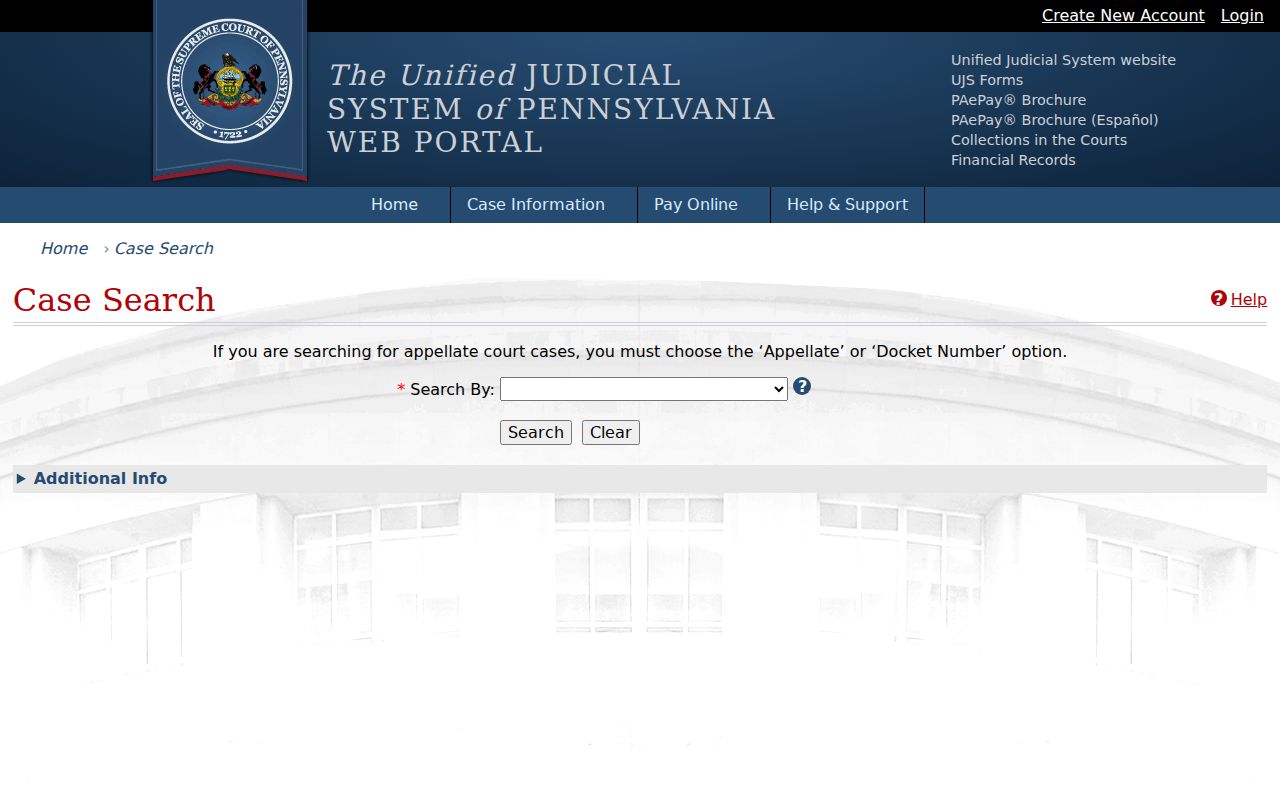
Use the docket details to identify the correct custodian before seeking a public paper record.
The Pennsylvania court docket-sheets page provides the related Common Pleas access route.
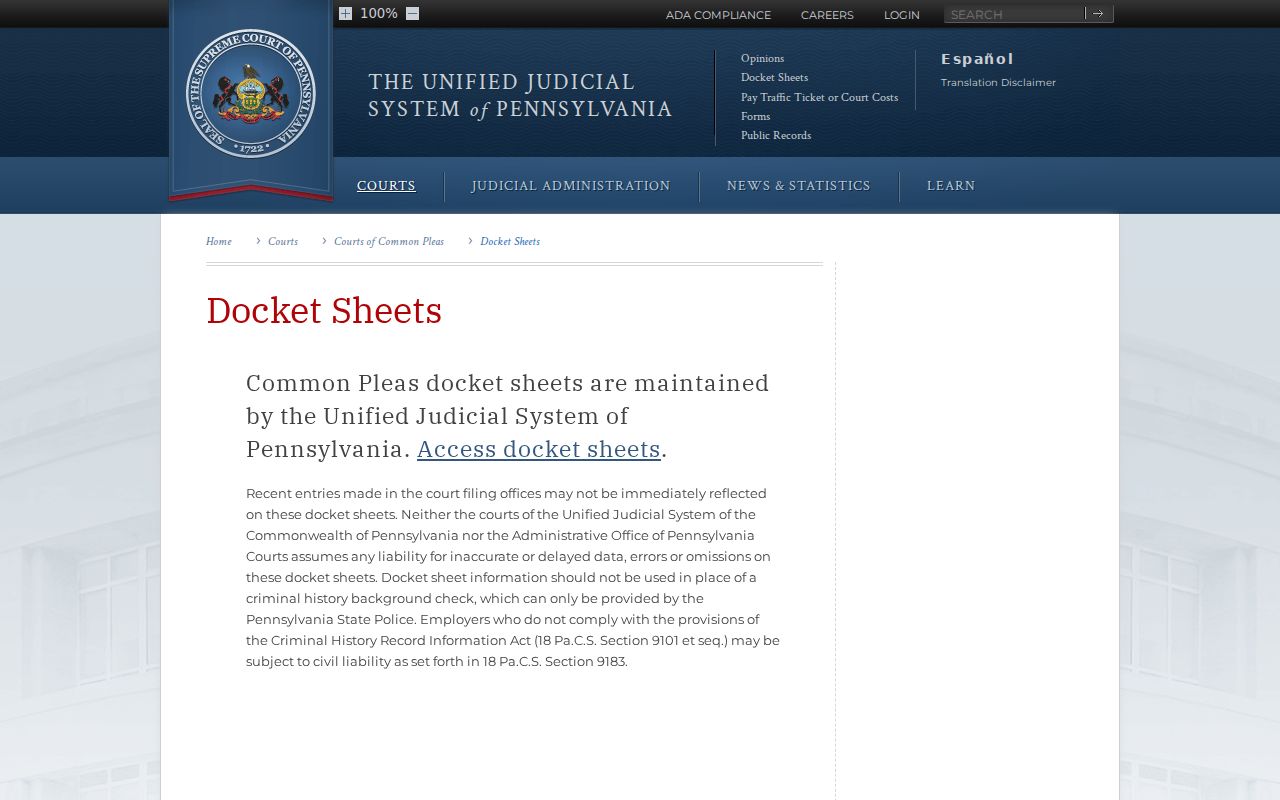
Its availability does not erase the separate restrictions that apply to protected court materials.
Whitehall Township Vital Records Custodians
The Pennsylvania Department of Health, Division of Vital Records is the general custodian for modern Pennsylvania births and deaths since 1906. A township or county office is not the general certified-copy office for a Whitehall event. Birth and death certificates have eligibility and identification rules, while marriage and divorce follow county-court channels. For historical work, the State Archives supplies mature record access and LCHS has related local collections.
Under the Pennsylvania Vital Statistics Law, birth records become public 105 years after birth and death records 50 years after death. The State Archives identifies its birth holdings as 1906 through 1920 and death holdings as 1906 through 1975, with non-certified archival copies. A certificate, index, announcement, or cemetery record can help establish a date or family link, but none alone confirms continuous Whitehall Township residence.
The Pennsylvania Department of Health Vital Records page is the starting point for the state’s modern certificate routes.
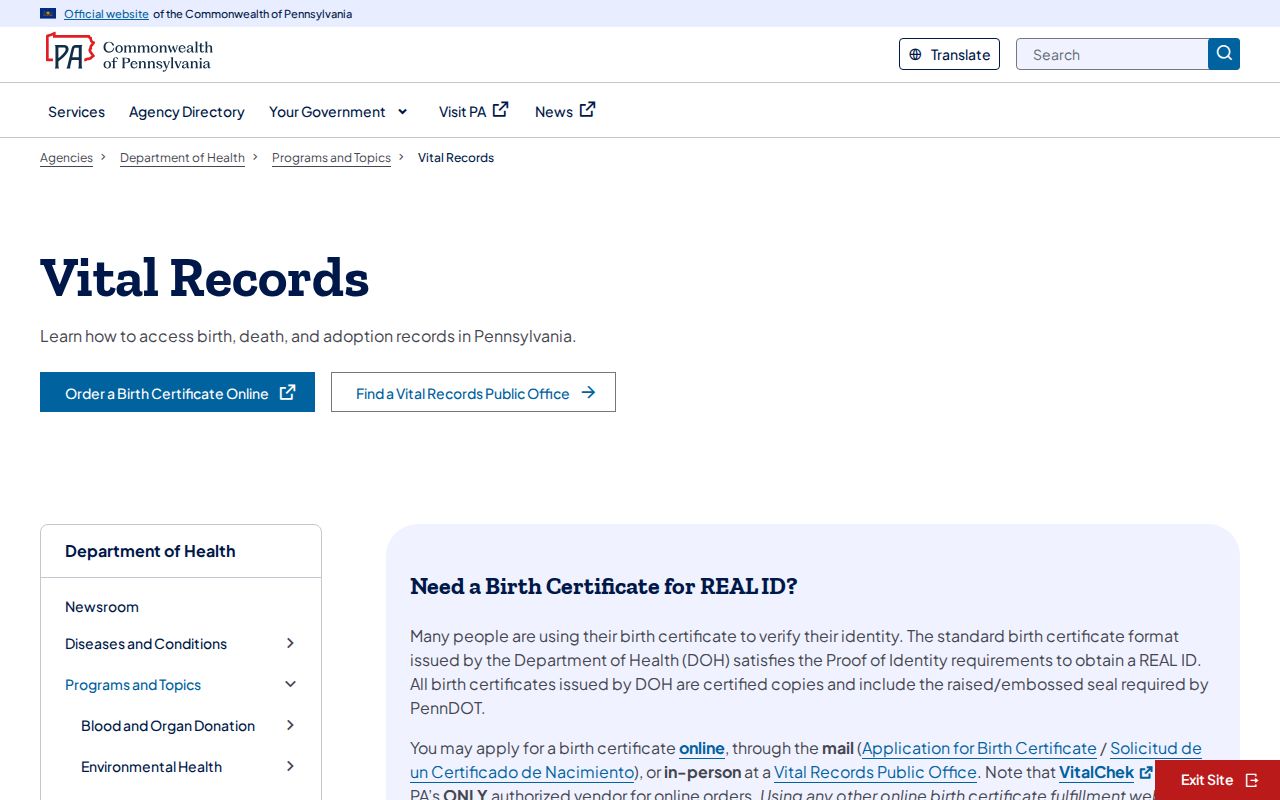
Use its forms and eligibility information for the appropriate certificate process rather than asking a local office to perform a general name search.
The Pennsylvania State Archives request route identifies the historical-copy channel.
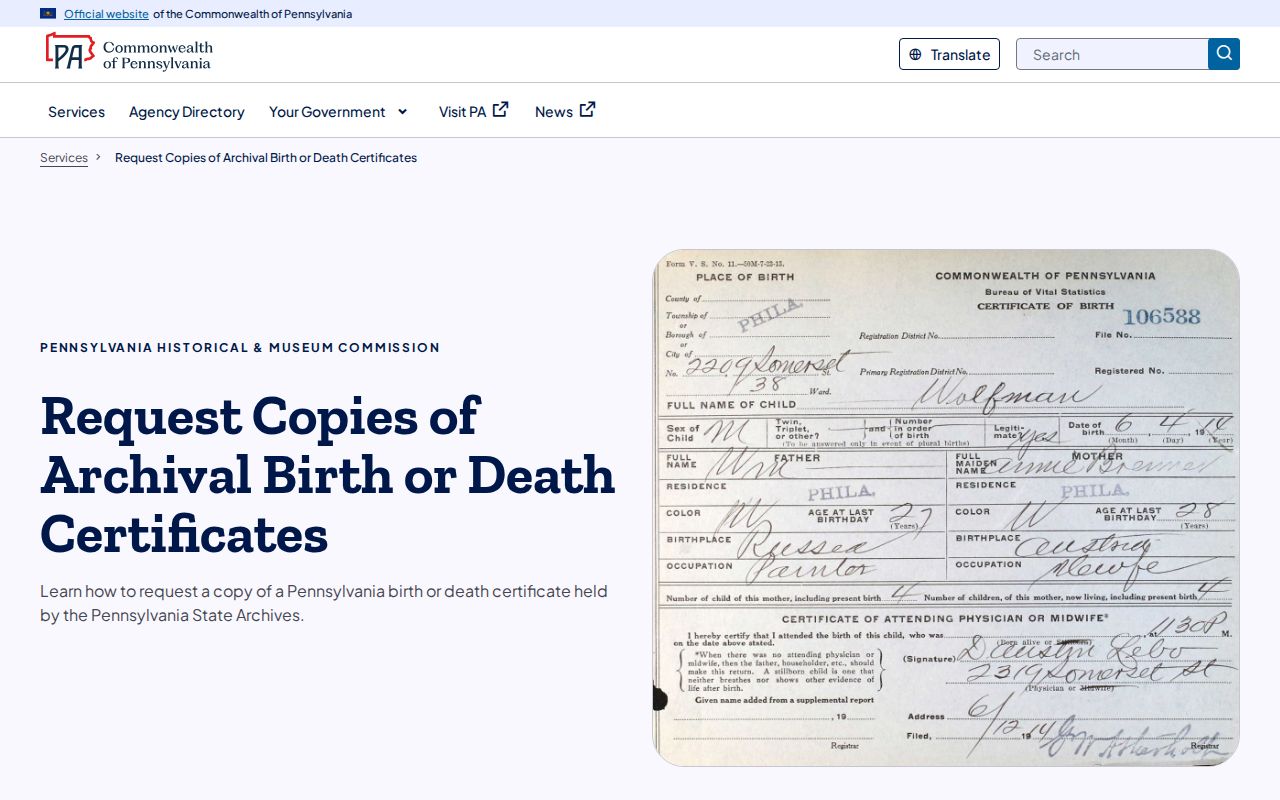
That archival route is distinct from a certified modern certificate request.
The Vital Statistics Law text states the public-maturity rule for birth and death records.
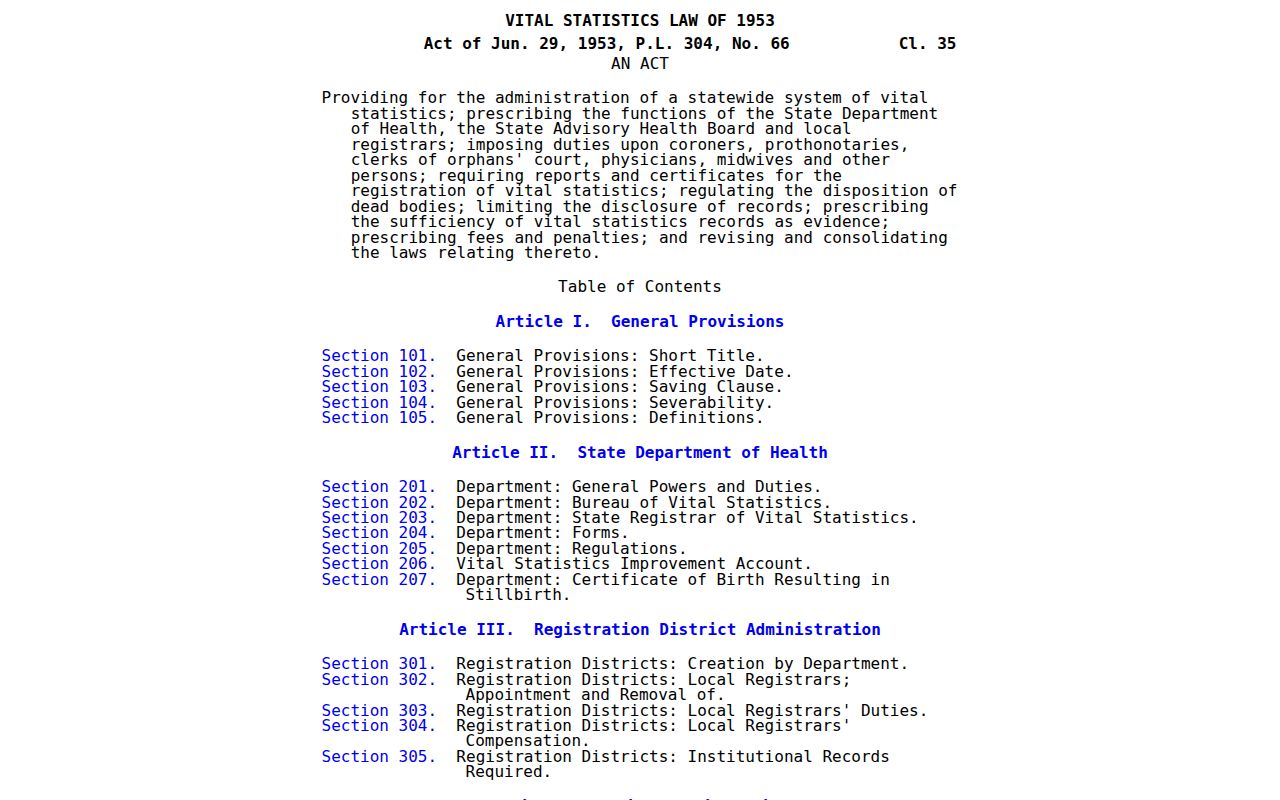
The statute does not turn a vital-record search into a general current-resident roster.
Whitehall Township Privacy Boundaries
Public access has limits. Pennsylvania’s Address Confidentiality Program can provide eligible participants with a substitute address for state and court records, voter registration, marriage licenses, driver credentials, school records, and utility bills. Court restrictions, election-list conditions, and driver-record protections are separate limits. A redaction, restricted result, or absent address is a stopping point, not a prompt to look for the protected information elsewhere.
Errors belong with the custodian. County Assessment handles assessment details, Lehigh Voter Registration and the state status route handle registration, a clerk or court handles a docket, and the Department of Health handles vital-record amendments. A name, date, and one address are often not enough to distinguish a person from a namesake.
Whitehall Township Deed Index Trail
For titled property, ORA and the Recorder form a useful sequence. Start with the address or PIN, preserve the current and old parcel identifiers, then use Sales History for a modern instrument number or earlier book and page. Landex accepts county and party details, dates, and document type, with alternate instrument-number and book-and-page tabs. The recorded index covers 1812 to the present, while images and copies carry payment terms.
A grantor is the party transferring an interest, and a grantee is the party receiving it. Trace each prior transfer through its legal description, not a mailing address alone. A seller can be the candidate for the preceding link, but the legal description, subdivision, lot, or parcel information must hold the chain together. Estate, trust, corporate, quitclaim, and subdivision transactions deserve extra care.
Recorder staff will not conduct research for a requester. Bring a known spelling, date range, document class, PIN or legal description, and an instrument number or book and page when seeking a copy. That is more effective than asking the counter to locate a former Whitehall Township resident.
Note: A deed index supports recorded property roles and transfer history, not a complete list of every household member at an address.
Whitehall Township Court Routes Compared
Official court sources and commercial compiled listings do not perform the same job. A UJS docket can provide free public court context, but it omits civil Common Pleas, juvenile, sealed, and other limited-access classes from that particular route. County Odyssey and the clerk serve different collections. A private compilation can merge old addresses and record fragments, yet it is neither the custodian nor the authority that can correct the government record.
| Question | Official custodian route | Commercial compilation category |
|---|---|---|
| What is the source? | A defined property, court, election, archive, or municipal record. | Mixed public fragments that can be stale, duplicated, or incomplete. |
| How is it checked? | Use the record number, legal description, date, or original image where available. | Compare against the underlying custodian before relying on a match. |
| How is an error handled? | Ask the agency that maintains the source record for correction. | Use the provider’s privacy or removal channel after checking the underlying record. |
A missing or restricted court result does not prove that a person has no record. It may mean another court route controls the material or that law limits access.
Whitehall Township Address Number Quirk
Older Whitehall Township records can use a village, rural route, post-office form, or number that does not look like a modern address. In 1968, Ordinance 883 created a master numbering system as five village post offices and eleven delivery routes were centralized. That shift can make an otherwise sound directory or deed search appear to fail when the same property is described in an earlier form.
Search the relevant village name with the surname and compare the old parcel ID, subdivision or lot, legal description, historic map, and dated directory entry. Egypt, Cementon, Fullerton, Hokendauqua, Mickleys, Stiles, and West Catasauqua may be indexed differently. Whitehall Code chapter 163 is the documented source for the master-numbering framework.
Whitehall Township Library Research Paths
Whitehall Township Public Library is the accessible local starting point for yearbooks, historic pictures and books, Civil War Graves, Kern Letters, Ancestry Library Edition, Fold3, and MyHeritage. Ancestry Library Edition is available in the library, not as a general remote household lookup. The catalog and cooperative network can locate a title, while the library’s collections give historical context for a classmate, family name, school history, or community organization.
Allentown Public Library adds city-directory microfilm for 1860 through 1980, newspaper microfilm, census resources, and a Morning Call obituary index for 1895 through 1983. The Lehigh County Historical Society holds the deeper Allentown directory run, county tax, land, estate, church, cemetery, and map material. Prepare a named person, subject, or document before seeking remote archival help because LCHS does not present its remote lookup as an open-ended genealogy search.
The Whitehall Township Public Library genealogy resources identify the local databases and their access conditions.
Historical Whitehall Township Resident Directories
Historical Whitehall Township residents directory research usually reaches beyond a single township-named volume. The township is made up of villages and lies in a Lehigh County and Allentown directory economy. A household may appear under Egypt, Cementon, Fullerton, Hokendauqua, Mickleys, Stiles, West Catasauqua, an Allentown heading, a ward, or a rural route. The first locally verified directory year is 1860, but no source established a complete standalone Whitehall directory sequence.
LCHS documents Allentown City Directories from 1860 to current. Allentown Public Library documents microfilm from 1860 to 1980. Penn State offers a digitized 1860 Boyd regional directory with a Lehigh County farmers list. A printed line may offer a name, occupation or business context, and an address, but the exact edition, page, heading, and nearby entries should be preserved. Pair it with the nearest census, deed, map, obituary, church record, or estate record before drawing a conclusion.
For a deeper historical shelf, use the Whitehall Township city directory resources, including how editions are read and matched across time. LCHS also holds Egypt and Cementon Sanborn maps for 1885 through 1927, which can test whether a building or street layout existed in a given map year.
Note: A historical directory is a dated publication with its own coverage rules, not a claim that every Whitehall Township household appeared in that edition.
Whitehall Township Records Beyond Web
When the online trail ends, narrow the request rather than broadening a name search. The Recorder counter can address a known document, volume, copy, or certification process. Township RTKL requests should identify a municipal record category, address or parcel, and date range. Lehigh County’s Open Records Officer handles county RTKL routing, while court and election records retain their own procedures. A request under the Right-to-Know Law is not a universal substitute for a court, election, or vital-record process.
For older work, the fallback chain is also local: Whitehall Township Public Library for catalog and in-library resources; Allentown Public Library for directories, newspapers, and obituary indexing; LCHS for county archival material; and the State Archives for its defined historic holdings and microfilm. Before county formation in 1812, a property or person trail may require Northampton County records. That is a jurisdiction boundary, not evidence that Lehigh records were lost.
For current permit interpretation, Whitehall’s 2026 construction-code transition can affect the code material cited near the changeover. Seek the discrete permit, plan, inspection, grant, or contract record that bears on the question rather than inferring facts from a public announcement.