
Whitehall Township City Directory Holdings
Whitehall is a township of villages, not a place with one verified, uninterrupted municipal directory run. Cementon, Egypt, Fullerton, Hokendauqua, Mickleys, Stiles, and West Catasauqua are all useful search labels. A household can therefore appear in an Allentown or Lehigh County edition instead of under Whitehall Township. The strongest documented shelf is at the Lehigh County Historical Society, also known as the Lehigh Valley Heritage Museum. Its inventory lists Allentown City Directories under call number 917.482 from 1860 to current. Ask whether the specific edition covers the village or rural listing at issue.
| Collection | Documented years | Where held | Access route |
|---|---|---|---|
| Allentown directory volumes, 917.482 | 1860 to current | Lehigh County Historical Society | In-person research library; village coverage should be checked by edition |
| Boyd’s Directory | 1860 | Penn State PA’s Past Digital Bookshelf | Online regional directory and farmers’ list |
| Allentown directory microfilm | 1860 to 1980 | Allentown Public Library | Use the public microfilm readers or request research help |
| Whitehall digital and genealogy collections | No city-directory run stated | Whitehall Township Public Library | Catalog, Digital Library, and in-library research tools |
The date ranges above describe documented holdings, not guaranteed coverage of every street or person. The historical society’s 1860-to-current notation does not establish the first standalone Whitehall directory or a last printed edition. It is safer to request an Allentown or Lehigh County edition by year, surname, and village than to assume a complete township volume exists.
Note: Record the edition title, year, page, village label, and spelling before comparing any directory result with another source.
Whitehall Township Village Labels
Village names are more than local color in a Whitehall Township directory search. They can be the filed locality in a newspaper, map, cemetery record, or address line. Egypt and Cementon also have Sanborn map coverage at LCHS for 1885 through 1927. Those sheets can test a building or street layout, but they do not identify a household by themselves. Pair a map with a dated directory, tax record, deed, or notice before drawing a conclusion about a family.
Ordinance 883 adds an important local wrinkle for old addresses. In 1968, Whitehall created a master numbering system after five village post offices and eleven delivery routes were centralized. The ordinance assigns Fullerton 0001 to 1999, West Catasauqua 2000 to 2999, Hokendauqua and Stiles 3000 to 3999, Egypt 4000 to 4999, and Cementon 5000 to 5999. MacArthur Road was excepted. Preserve the original form of an older address, then bridge it with a parcel identifier, legal description, or map instead of overwriting it with a modern number.
Whitehall Township Library Directory Access
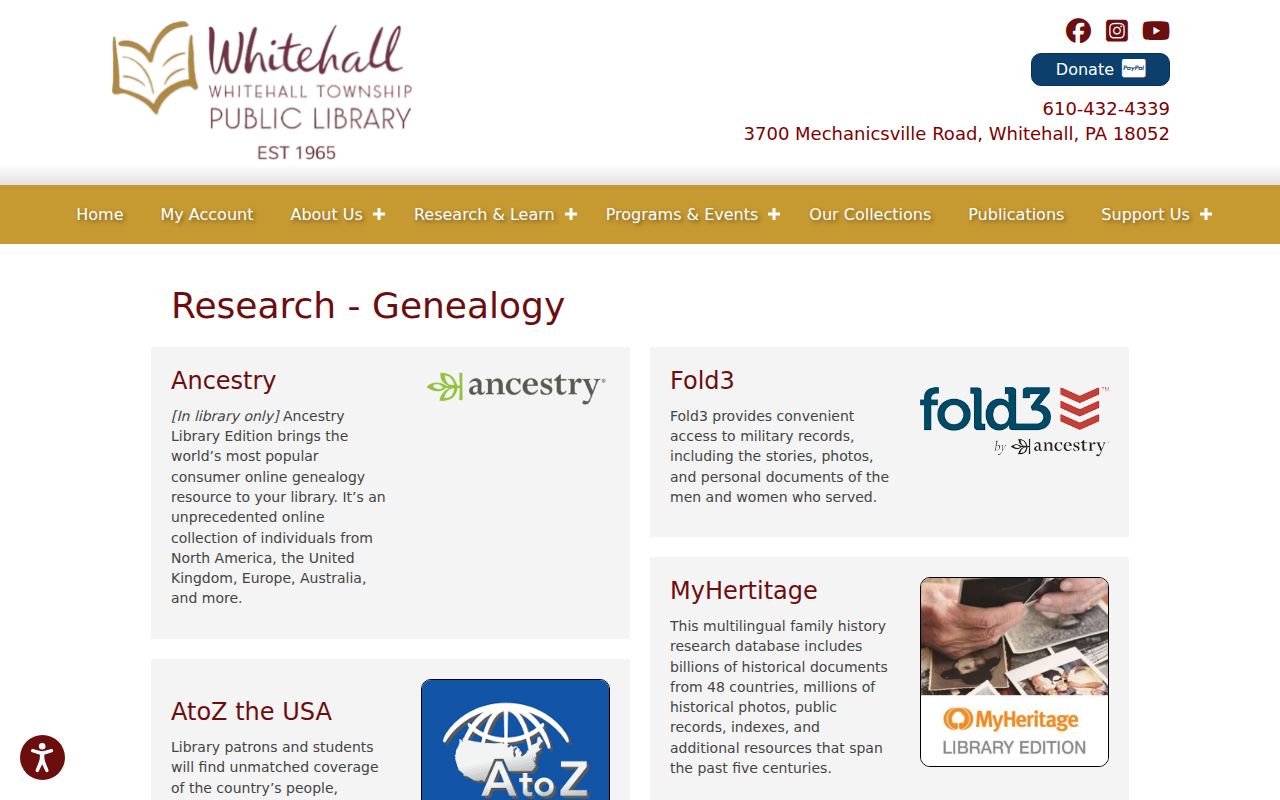
Whitehall Township Public Library provides a nearby starting point for surrounding evidence. Its genealogy resources include Ancestry Library Edition for in-library use, Fold3, MyHeritage, and a Digital Library with historic books, pictures, Civil War Graves, Kern Letters, and yearbooks. The library does not publish a verified Whitehall-specific printed directory shelf or year run. Use its catalog and cooperative borrowing network to test for an exact title, then confirm the edition in hand before treating it as local coverage.
The library’s genealogy resources show the local research channels that can supply a name or date to test against a directory volume.
Use an original image or catalog record to verify a result from a database. The library’s posted hours can change with construction or access work, so check its current information before a visit.
Whitehall Township Digitized Directory Evidence
Penn State University Libraries provides a concrete online starting point: the 1860 Boyd’s Directory of Reading, Easton, Pottsville, Allentown, & Lebanon. Its metadata confirms a regional volume, a business section, and a large farmers’ list that includes Lehigh and neighboring counties. It is not proof that every Whitehall household appears, but it is a date-specific source that can reveal a county or village trail before later series.
The digitized Boyd’s directory is the source for the following historical image.
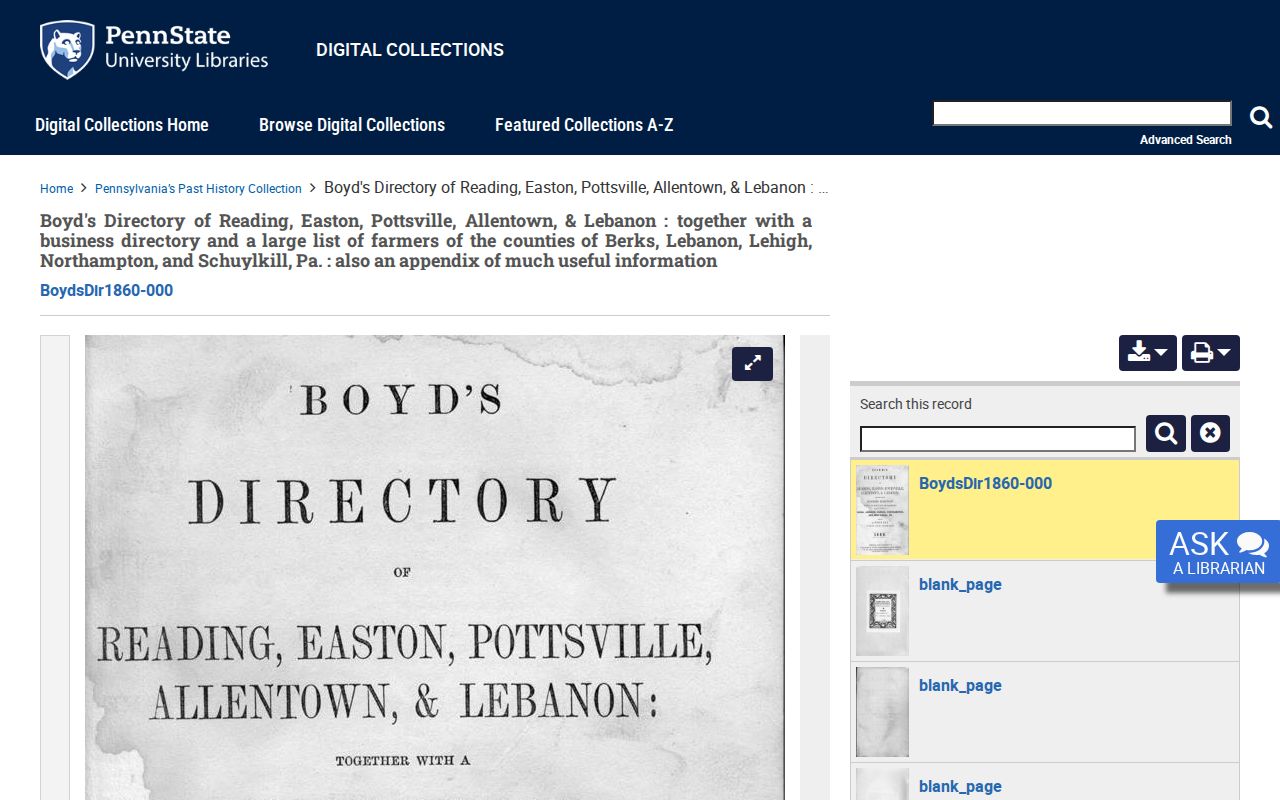
The inspected item did not expose a transcribed Whitehall entry or a complete abbreviation key. Capture the printed heading, page, surrounding lines, and edition details rather than inferring a notation from a modern record.
How a Whitehall Township City Directory Reads
A city directory entry is a compact record, not a complete biography. The 1860 regional example supports a careful description: a person’s line can give a name, occupation or business, and address, while the business and farmer sections organize information differently. The exact punctuation, spouse notation, ownership marks, and abbreviations must come from the printed key in the edition being used. No inspected source verified a standard Whitehall symbol for owner status or a spouse format, so those should not be assumed.
| Name | Copy the spelling exactly, including initials and any surname variant. |
|---|---|
| Occupation or business | Use only the role or business wording printed in that edition. |
| Address or locality | Preserve the street, village, rural-route, or nearby-city label as printed. |
| Section heading | Note whether the line appears in an alphabetical, business, or farmer section. |
| Edition evidence | Save the title, publication year, page, adjacent entries, and abbreviation key. |
- Criss-cross directory
- An address-ordered reference that can lead from a street to listed names. No Whitehall year run was verified, so confirm a volume before relying on one.
- Householder index
- An index arranged around the listed household or address. Its scope depends on the individual volume.
- Abbreviation key
- The printed explanation for the shorthand used in that edition. Photograph or copy it before interpreting an entry.
Whitehall Township Archive Access Compared
Three nearby research desks serve different parts of a Whitehall Township directory project. Their different holdings matter when one source produces a name but not enough context to verify it. Whitehall Township Public Library is the accessible local desk for its Digital Library and in-library genealogy tools. Allentown Public Library adds a documented 1860 to 1980 directory-microfilm run, newspapers, census material, and two public microfilm readers. LCHS holds the documented Allentown 1860-to-current run plus deep county collections.
The Allentown Public Library microfilm collection is a useful complementary source for the directory image below.
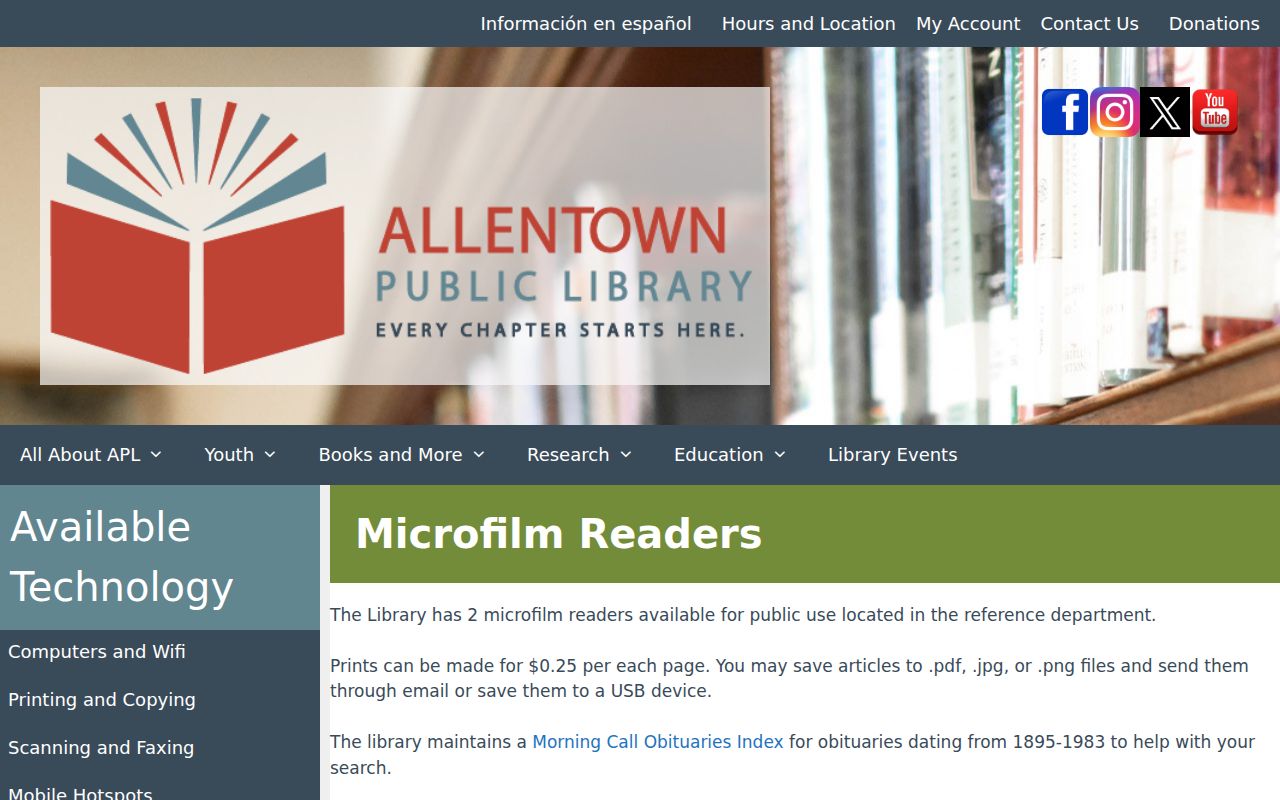
APL’s Morning Call obituary index covers 1895 through 1983 and indexes a name, publication date, and page. It is a trail marker, not a death-date record. APL also offers a Book a Librarian appointment when the entry, map sheet, or abbreviation key needs direct visual inspection.
The Lehigh Valley Heritage Museum research collection documents the archival source used in the next historical image.
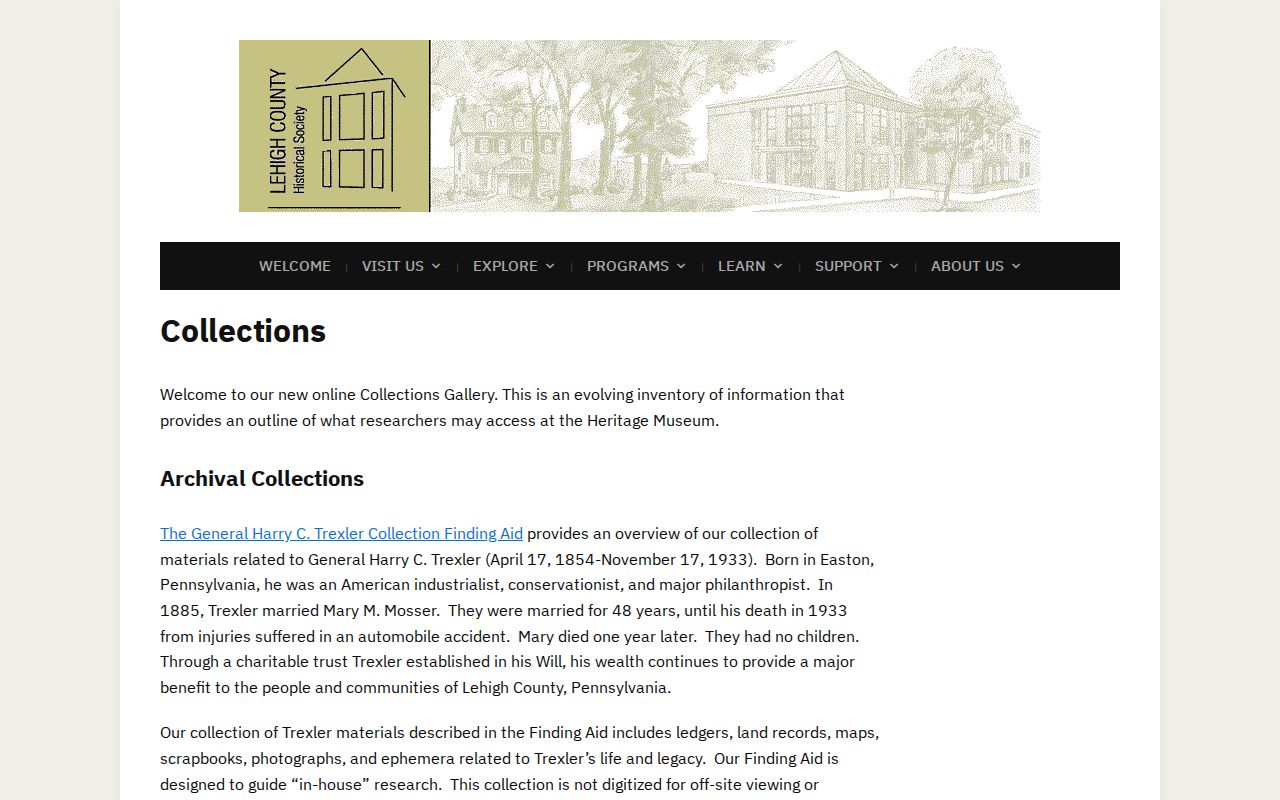
LCHS research-library hours are Tuesday through Thursday, 10 a.m. to 4 p.m., with Friday by appointment. Ask ahead about a directory edition, a microfilm reader, copying, and whether the village is indexed under another place name.
Whitehall Township Directory Timeline
Directory work is easier when the source dates are kept distinct. The verified dates below describe repositories and records history. They do not turn every year into a complete Whitehall volume. Older local sources can use a village or an Allentown label, while the 1968 numbering change can alter how an address is written.
- 1860: the first explicit directory year in the LCHS Allentown run, and the date of the digitized regional Boyd’s volume.
- 1860 to 1980: the documented Allentown Public Library city-directory microfilm span.
- 1885 to 1927: LCHS Sanborn map coverage for Egypt and Cementon provides building and block context.
- 1968: the Township master numbering system centralized former village post-office and delivery-route practices.
- Current: LCHS describes its Allentown city-directory shelf as 1860 to current, without establishing a final printed volume.
Note: A date on a repository listing describes the holding, while a date on an entry describes only that edition’s evidence.
Tracing Families in Whitehall Township City Directories
Follow a household through a Whitehall Township historical-directory search by preserving each name, spelling, occupation, village, and address exactly as printed. Begin with the current parcel card only to collect a legal description or older parcel clue, not to rewrite the old address. Then test the surname under the named villages and nearby Allentown or Lehigh County editions. When a volume supports a street search, record the neighboring lines as context, but do not infer an unlisted household from proximity.
- Write the modern address, village, township, county, and postal label separately.
- Record the parcel legal description, old parcel identifier, and acquisition instrument for address continuity.
- Search LCHS and APL directory years by surname, alternate spelling, village, and street when the volume permits it.
- Pair the nearest directory year with the nearest released federal census, keeping the directory address and census geography distinct.
- Use marriage and death notices, church or cemetery records, tax rolls, wills, and deeds to test a move, marriage, or death.
- Check an Egypt or Cementon Sanborn sheet when building or street continuity is the question.
A disappearance can reflect a move, death, marriage, changed spelling, nearby municipality, or a gap in that edition’s scope. For modern name confirmation after an historical find, the separate Whitehall Township resident lookup route uses current custodial records rather than treating an old entry as current evidence.
Whitehall Township Yearbooks and Notices
When a directory line is thin, nearby collections can provide a second dated lead. Whitehall Township Public Library links yearbooks, historic pictures, and books through its Digital Library. LCHS maintains German and English newspaper microfilm, indexed marriage and death announcements, church and cemetery volumes, tax records, mortgage material, wills, and estate files. For Pennsylvania German families, search spelling variants and church records alongside a directory surname.
Remote archive help has limits. LCHS publishes a named-person, topic, or document lookup process rather than an open-ended genealogy search, with a typical stated reply of four to six weeks and a published fee schedule. Prepare a volume, year, page range, or collection target first. That narrow request is more likely to distinguish a useful record from a broad name match.